
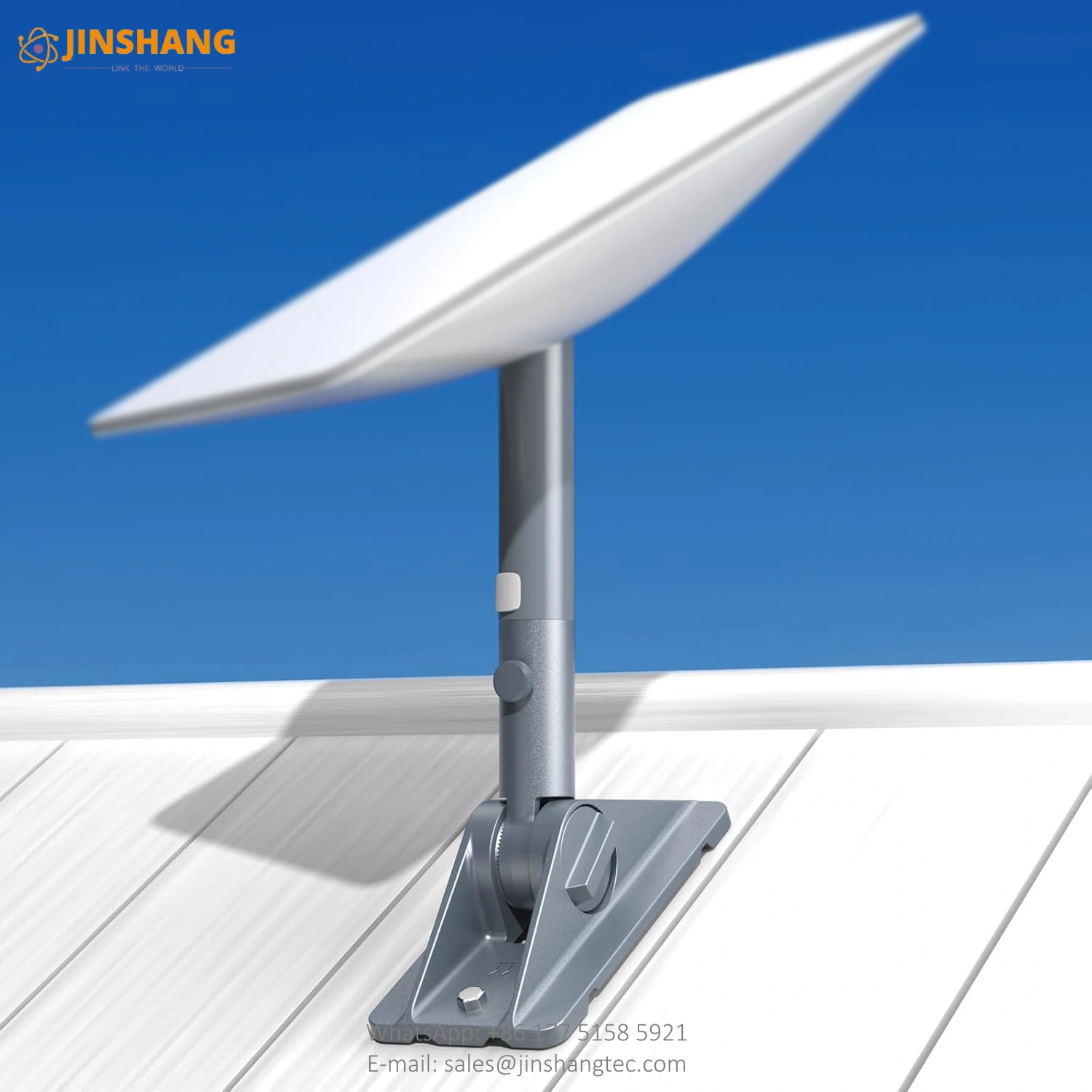
Musk said it almost as an aside at the DealBook Summit on November 18: SpaceX has finished designing a miniature cell tower you put on your roof, “like a Starlink dish.” The point is the one problem satellites can’t solve on their own — getting a phone signal through a thick or metal roof into the rooms underneath.
Why the roof, and why now
A phone outside can already talk to a Starlink satellite. Inside, under a metal roof or thick concrete, that signal dies. SpaceX’s answer is a second layer: small ground-based cells using the 800 MHz spectrum it is buying, placed on rooftops in dense areas instead of big towers. Musk said the design is done and the units are “going into production, I think, next year” — 2027. He also said SpaceX will start launching its Direct-to-Cell V2 satellites next year, with roughly 40 times the bandwidth of the current generation.
The spectrum piece moved a week earlier. On November 10, the FCC‘s Wireless Telecommunications Bureau accepted for filing the transfer of 546 800 MHz licences from Grain Management to Starlink Spectrum Holdings. That is a procedural step, not an approval — the transfer still has to be approved, with public comments due December 1 and opposition due December 8. The licences cover all 50 states, Washington DC, Puerto Rico and the US Virgin Islands, and the FCC said service built on them would reach about 100% of the US population. The Wall Street Journal valued the deal at about $8 billion. The big three carriers — Verizon, AT&T and T-Mobile — all turned down letting SpaceX’s mobile service run on their networks, which is why SpaceX is buying its own airwaves instead.
What it is, and what it isn’t yet
This is not a product you can order. No price, no launch date, no spec sheet, no confirmed bundling — Musk floated putting the microcells together with Starlink terminals in one package, but SpaceX hasn’t confirmed that. And Musk has missed his own production deadlines before, as TechCrunch notes in the same report, so “going into production next year” is a target, not a promise. Service on SpaceX’s own airwaves is targeted for early 2028, according to president Gwynne Shotwell on the October 20 earnings call.
The other thing to keep straight: this is phone service, not internet. Your dish still does the internet, and nothing in this announcement changes what the dish needs — a clear view of the sky, a mount that holds, a cable long enough to reach it and power that stays clean. If anything, the announcement makes the roof more crowded, not less: the dish, and now possibly a small cell box beside it, both living up there in the weather, both needing a solid mount and a cable run that survives the seasons.
What to watch
Three dates matter. December 1 and 8: the FCC comment window on the spectrum transfer. 2027: the production target for the microcells and the first V2 satellite launches. Early 2028: Shotwell’s target for service on SpaceX’s own airwaves. If the FCC says yes and the hardware ships on time, the dead zone inside your house gets a rooftop fix. If either slips, the dish on your roof keeps doing what it already does — and the cable and the mount are still the parts that decide whether it works.
Sources: TechCrunch, “Elon Musk says SpaceX has a plan to eliminate cell phone dead zones” (19 Nov 2026); TheStreet, “Elon Musk edges closer to taking the T-Mobile and Verizon crown” (21 Nov 2026); TeslaNorth, DealBook 2026 coverage (19 Nov 2026).
