
The FCC has just cleared the way for faster Starlink — and you don’t need to buy anything.
On Thursday, the US Federal Communications Commission granted SpaceX full licences for 36 next-generation gateway stations, PCMag reported on 13 November. Gateways are the ground stations that move data between the internet and the satellites overhead — fibre-connected buildings full of antennas, not something that sits on your roof.
These aren’t ordinary gateways. SpaceX described them in filings from April as “next-generation quadband gateway earth stations”, each with 40 antennas, built to deliver what the company calls “gigabit-speed, low-latency broadband” with “fiber-like capacity”. The FCC had already let SpaceX run them under temporary authority while the applications were pending; Thursday’s grant makes 36 of them fully licensed. A few applications weren’t in the grant — including a site SpaceX calls “First of Its Name”, which keeps running under temporary authority until January. Iridium, which runs its own satellite network, protested on interference grounds at first, then withdrew its petition.
The catch: the satellites aren’t there yet
A gateway is only half the connection. The other half is SpaceX’s new V3 satellites, and there are only a few dozen of those in orbit. Twenty-six were up before Friday; a second batch of 26 went up on Starship’s latest test flight on Friday night — the one where the booster came down in the Gulf of Mexico instead of landing back at Starbase, as NPR reported on 14 November.
SpaceX president Gwynne Shotwell put it plainly on last month’s earnings call: “I think we’ll need a few hundred V3 satellites for people to really feel the impact,” and she thinks that’s achievable by mid-2027. So gigabit Starlink is real, it’s licensed, and it’s still a year or so away from your roof.
Your dish stays
Here’s the part that matters if you already own a dish: nothing in this approval asks you to replace it. SpaceX says the capacity increase should benefit all users by relieving congestion, whatever dish they own, and the newer V5 and Mini 2 dishes are compatible with the V3 satellites. The bottleneck has been in space and on the ground — not on your roof.
So if you’re choosing a plan or buying kit now, buy for the speeds Starlink delivers at your address today, not for a gigabit future that SpaceX itself schedules into 2027.
Related: Gen 2 vs Gen 3
The one thing worth checking: the cable
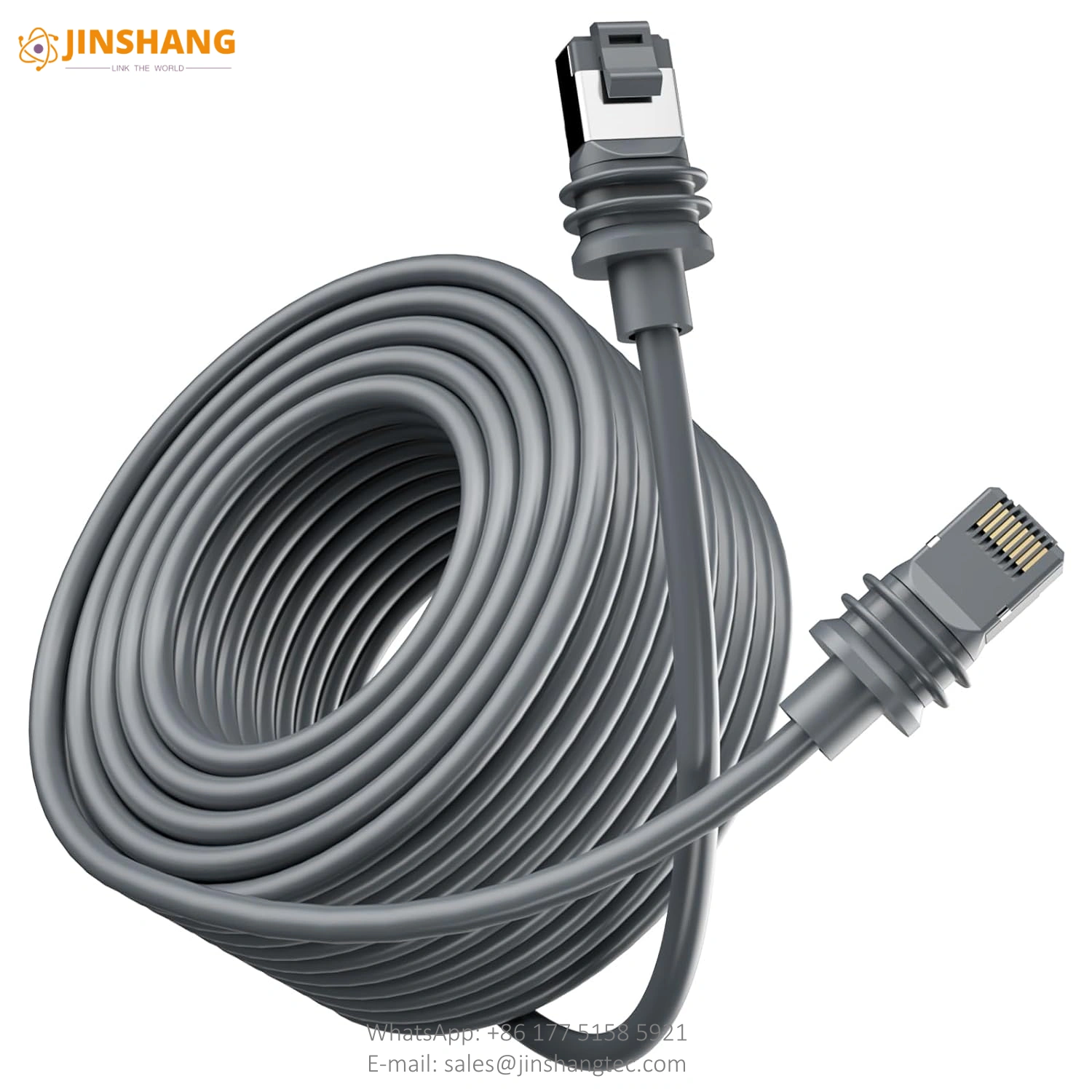
When speeds do climb, the weak link in a home install is usually the cable between the dish and the router — the part you own. Our Gen 3 replacement cable is CAT5e FTP, 24 AWG, rated at 1 Gbps, in 2, 10, 15, 23, 30 and 46 m. That’s above anything Starlink delivers to a home today, so there’s nothing to change now. But it’s worth knowing where your cable runs, and checking it once in a while: a chewed jacket, a crushed section under a window frame, or a join left out in the rain will cost you more speed than any gateway ever will. The weatherproofing lives in the plug and the seal, not just the cable — a plain indoor patch cord fits a Gen 3 dish but won’t stay dry outside.
If your run has to go through a wall or a conduit, that’s what the Gen 3 RJ45 adapter pair is for — two short leads with IP68 waterproof couplers that turn the dish plug into a standard socket, so the long middle run can be ordinary shielded Ethernet cut to length.
Sources: SatellitePlan, “FCC clears 36 next-gen Starlink gateways for gigabit speeds” (15 November 2026), reporting PCMag (13 November 2026) and NPR (14 November 2026).
